[Computer vision]

Your bespoke AI model for image and video analysis

We build and train computer vision models on your own images and videos, then deploy them on your infrastructure or your machines. They automate the inspection, counting or identification your teams do by hand today
70+ vision solutions deployed and paying off for our clients
Up to 98% accuracy on recognition tasks with our models
140+ senior tech profiles from France's leading schools: Polytechnique, Centrale and ENS
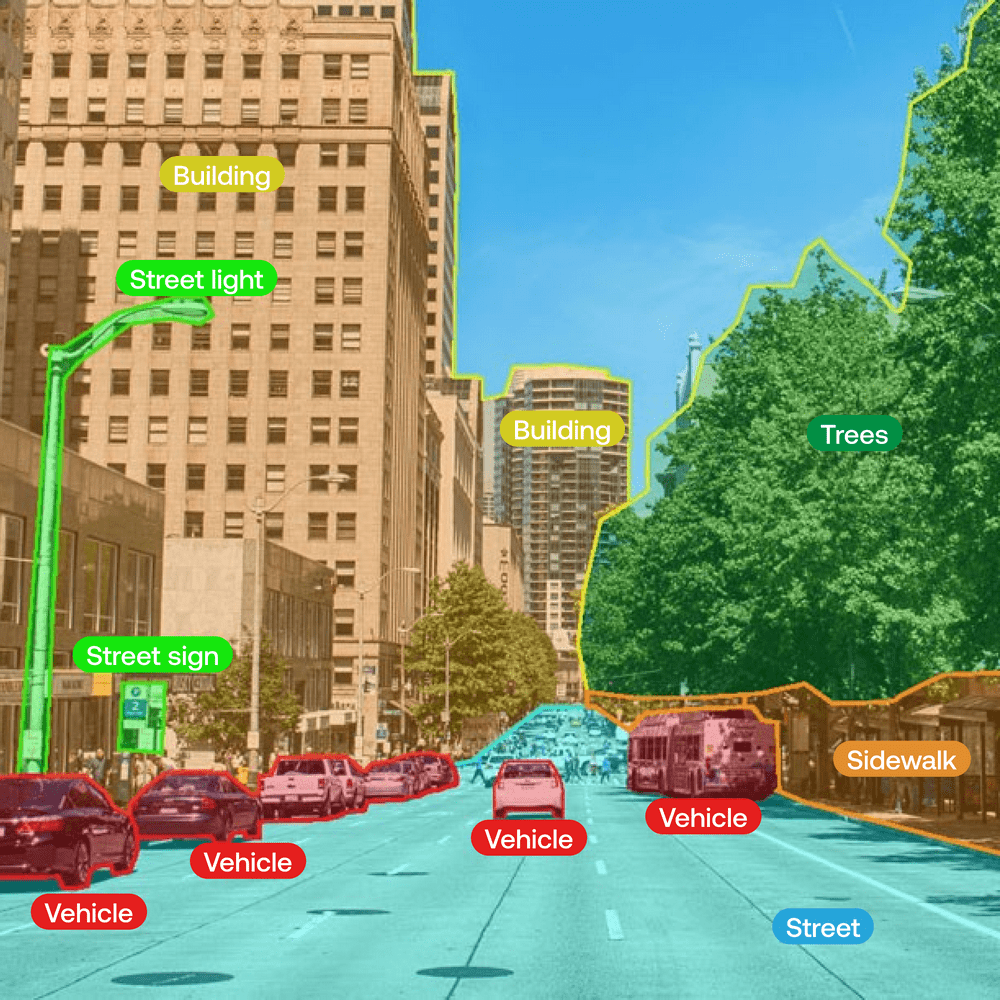
Urban street scene analysed by a vision model – buildings, vehicles, trees and pavement segmented and labelled
800+ organisations trust us with their tech and AI projects
[Our specialities]
Example applications

We train models on your own images, build them into your tools and deploy them on your infrastructure, with high accuracy
Object detection and tracking

Object detection and tracking

Detection models locate each object in an image with a bounding box and track it from frame to frame in a video, for monitoring an area or automatic counting
Semantic segmentation

Semantic segmentation

Segmentation models assign a category to every pixel and outline each region of an image down to its exact contour, for precision mapping or scientific and medical imaging
Image classification and search

Image classification and search

Classification models assign a category to an image, and visual search engines find the closest matching images, to identify a catalogue reference or explore a document archive
Anomaly detection and quality control

Anomaly detection and quality control

Anomaly models learn what a normal part or surface looks like and flag any deviation, to catch a cosmetic defect, an incomplete assembly or wear before it reaches your customer
Pose estimation and motion analysis

Pose estimation and motion analysis

Pose estimation models locate the joints and key points of the human body to determine posture and infer movement, for ergonomics and sports analysis alike
Document reading and scene understanding

Document reading and scene understanding

Optical character recognition extracts text from an image or a scanned document, and multimodal models answer a question about an image directly (Visual Question Answering)
[Our work]

Seven vision models in service with our clients

FOOD PACKAGINGGroupe Guillin

Finding a packaging reference from a single photo

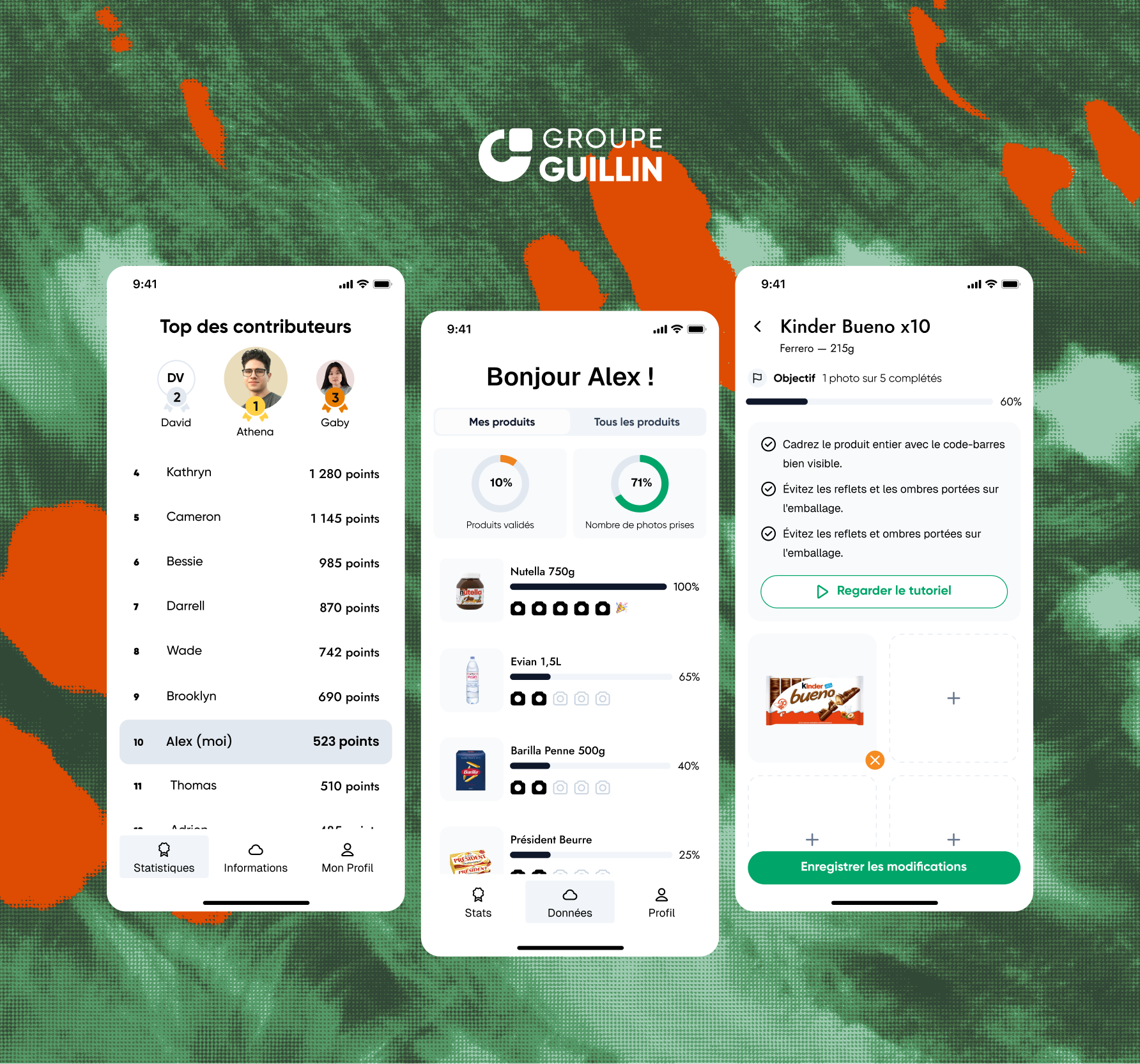
Groupe Guillin, Europe's leading food packaging manufacturer, has a catalogue of nearly 25,000 references that its sales reps need to identify quickly when visiting customers. Galadrim trained the vision model that recognises a piece of packaging in a photograph and matches it to its reference. We collected the training images together with the group's teams. Now a photo of a product is all it takes to get its reference on the spot.
25 000CATALOGUE REFERENCES
250DAILY USERS
95 %ACCURACY
Groupe Guillin Logo
MANUFACTURINGCastrol (BP)

Securing a filling line with standalone vision AI, on a site with no internet connection

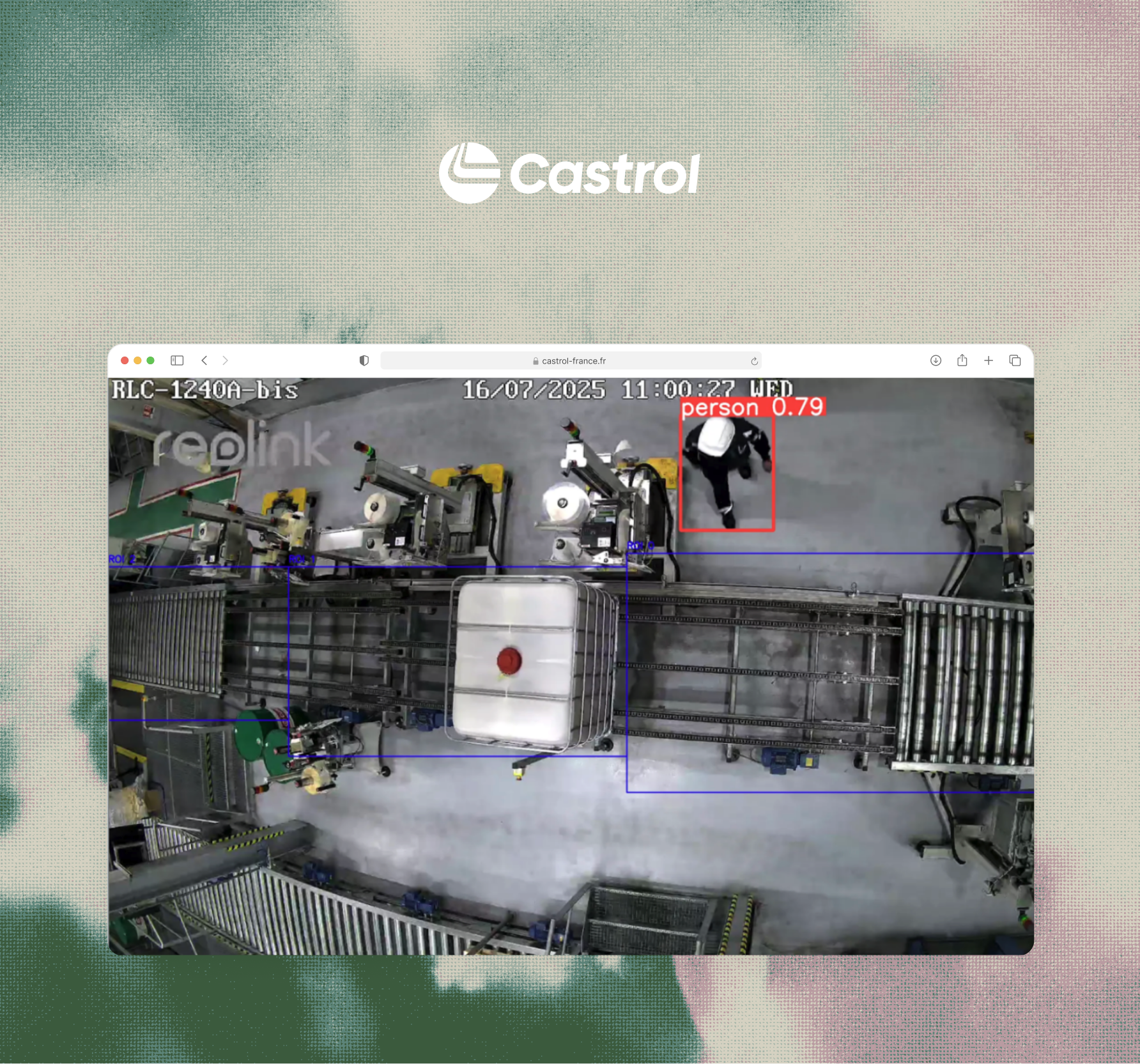
Castrol, part of the BP group, runs an automated filling line on a fully offline site. Stepping into it during a cycle risks a serious accident. We trained a detection model on several hours of video and 500 annotated images, chose hardware able to run it on site, then installed the system on the line. A camera monitors the danger zone continuously: the moment someone enters it, an alert goes out, and no image ever leaves the plant.
95 %intrusion detection
100 %processed on site
1pilot line equipped
Castrol (BP) Logo
SURFACE TREATMENTMECAPROTEC

Counting and inspecting aerospace parts with computer vision

Mecaprotec treats and finishes the surfaces of parts for the aerospace industry, including painting and chemical treatments. Counting parts at the inspection station tied its operators to a repetitive task with a direct impact on throughput. Galadrim trained a computer vision model that detects and counts the parts from the station's images, sized the hardware required, then delivered the application the quality teams use to track inspections at the pilot site.
300employees
MECAPROTEC Logo
LUXURY HOUSECHANEL

Measuring how a cosmetic is applied, with AI

Chanel's neuroscience unit wanted to understand how its products are really used, based on filmed tests. The aim was quantifiable data on how a person applies a cosmetic. Galadrim developed image recognition algorithms that track the user's head, hand and fingers throughout the video. Each gesture is counted and classified by type: semi-circular massage or tapping. That gives Chanel an objective measure of how a cosmetic is applied.
97%ACCURACY
CHANEL Logo
LEISURE AND ARCADESAVRANCHES AUTOMATIC

Reading the score on an arcade machine and crediting it to the player's account

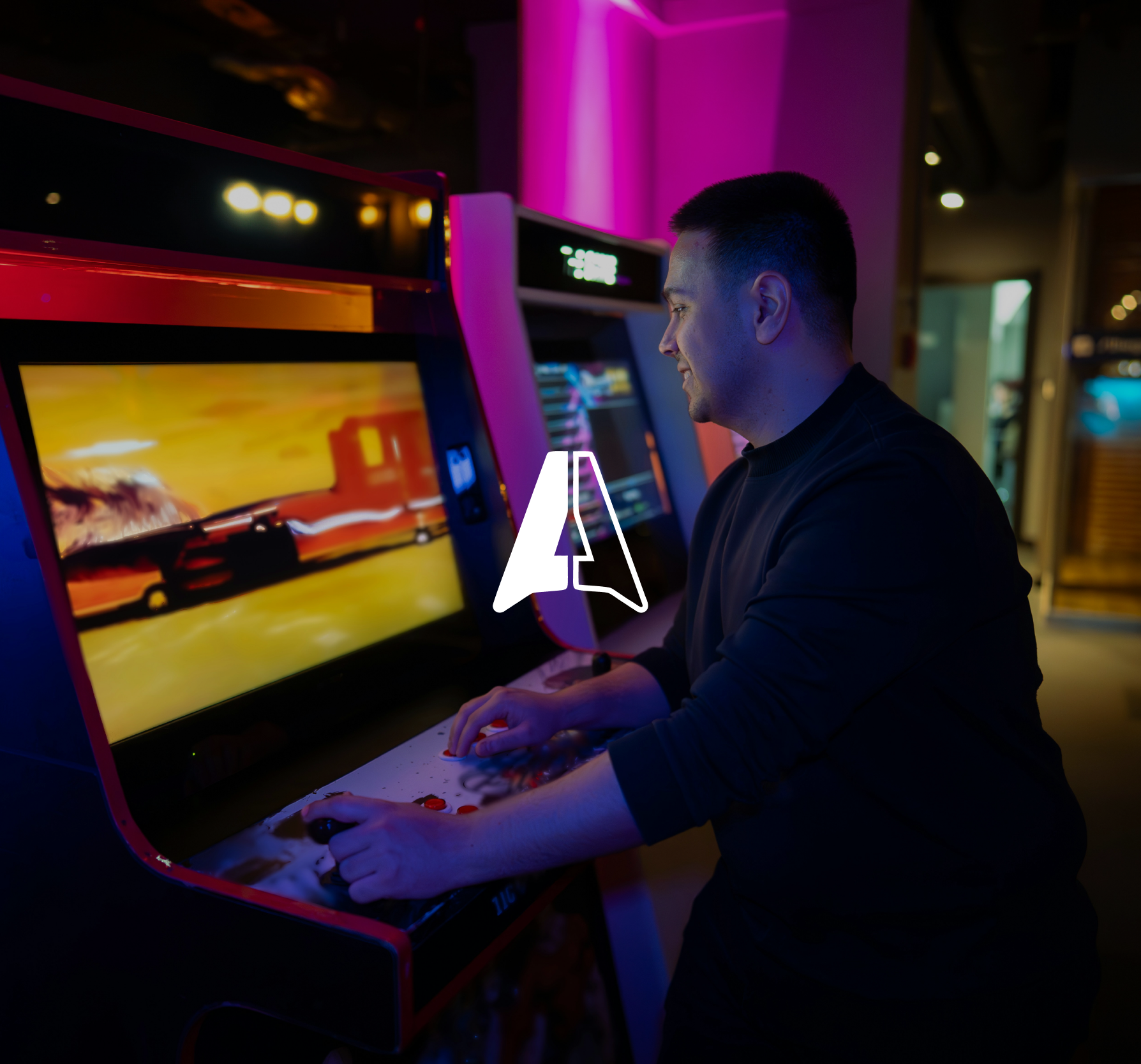
Avranches Automatic opens arcades in railway stations, including Lyon Part-Dieu, and wanted to link every game played to the player's account without modifying the machines. Galadrim developed the vision module that continuously reads the video feed from each machine's screen, picks out the end-of-game score and sends it to the server, from a board installed inside the machine. Players unlock a machine with their contactless card, play, then find their score and ranking in the mobile app delivered with the system.
+30ARCADE MACHINES EQUIPPED
AVRANCHES AUTOMATIC Logo
ART MARKETPLACEYourArt

Searching for artwork without the specialist vocabulary

YourArt combines an art news outlet with a marketplace where artists and galleries exhibit and sell their work, with over a million visitors a month. Its visitors were searching for works without knowing the vocabulary: style, technique or movement. Galadrim embedded two developers and a designer in the product team for two and a half years. Together we built a search that understands a plain-language description just as well as a reference image, using visual features extracted from every work in the catalogue.
1M+visitors a month
+700art galleries
+78countries
YourArt Logo
AUTONOMOUS RETAILGozoki

Monitoring an autonomous shop with live video analysis

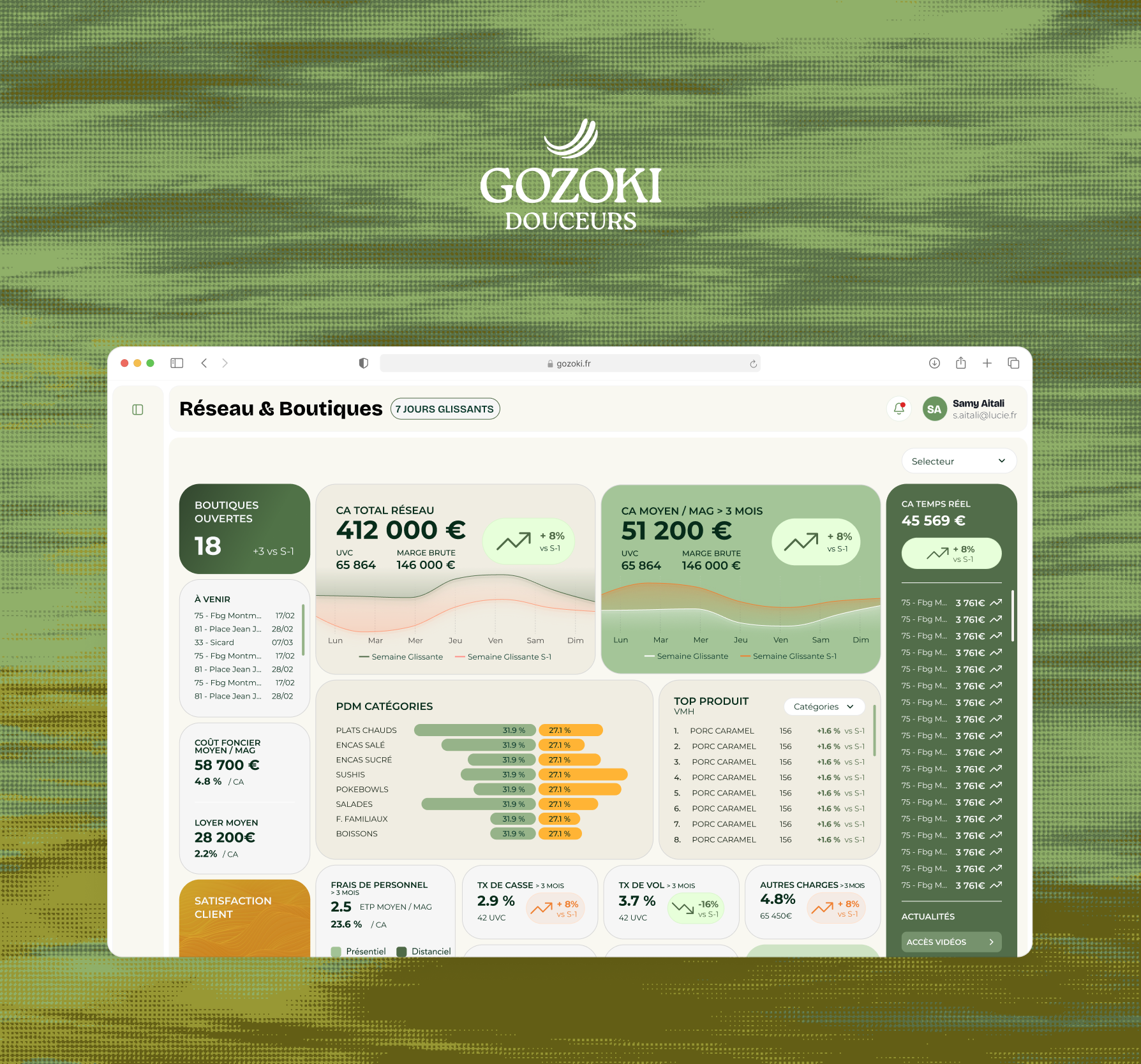
Gozoki, a French food group specialising in premium ready meals, is rolling out a network of autonomous shops open around the clock. In-store operations are monitored entirely by automatic surveillance. Galadrim developed the vision system that analyses the shop's cameras live, tracks every person and every product, and identifies the situations that need flagging. The web application delivered with the system shows the state of the shop in real time and alerts security staff to incidents.
6video feeds analysed per shop
100+autonomous shops planned
€380Min revenue
Gozoki Logo
[Our method]

How we put a vision model into production

  • Scoping
    Step 01

    Use case, accuracy threshold and operating conditions

    We agree with you on what the model needs to recognise, the accuracy expected and the conditions it will run in. That threshold becomes the go-live criterion, fixed before any development starts.
  • DATA
    Step 02

    Collecting and annotating your images

    We work with your teams to collect images and videos that reflect your real conditions, then we annotate them. The quality of this dataset directly determines the performance you get in the field.
  • TRAINING
    Step 03

    Choosing the model and training it on your data

    We choose the architecture that fits your problem: a pre-trained model fine-tuned on your images, or a model trained specifically for it. Then we measure its accuracy on a test set you approve. You know what the model can do before it's installed.
  • INTEGRATION
    Step 04

    Business application and connection to your IT systems

    Our engineers build the interface your teams use to work with the model's results, and integrate it securely and robustly with your existing tools and IT systems.
  • DEPLOYMENT
    Step 05

    Installation at a pilot site

    We choose the hardware with you and decide where processing happens: a server, an industrial PC or a board embedded in the machine. Then we test the system at a first site before any wider rollout.
  • maintenance
    Step 06

    Accuracy monitoring and retraining

    We track the model's real accuracy in service and retrain it on new cases as they come up, so it keeps pace with changes to your products and your facilities.
01/06
[Why Galadrim?]

Why do companies trust us with their computer vision projects?

Proven expertise

800+ clients supported, 170+ experts and 9 years' experience building AI products, with vision models deployed in factories and in consumer apps alike.

Models trained on your own images

We handle the collection and annotation of your images, with your lighting, your camera angles and your difficult cases. Accuracy is measured on your own data before anything goes live.

AI expertise taken all the way to the shop floor

Our engineers size the hardware that will run the model at your throughput, install it on your line and calibrate it with your teams. Processing can stay entirely on your site.

A business tool built around the model

A model delivered on its own is just a demo. We build the application your teams use to review and correct its results, connected to your IT systems, so the data it produces goes straight to where it's useful.

Let's bring your project to life together

Contact us
[Our team]

A team that advises you before it builds

We recruit and train passionate engineers and experts from the top schools, who combine AI expertise with software engineering skills. That hybrid profile means we can design your bespoke AI systems and run them reliably in production.
Benjamin Drighès
Benjamin Drighès CTO Data & AI
Advises our clients on their product strategy, their long-term AI transformation and their key choices of technology and approach, and sets the quality standards for our AI teams.
Quentin Massonnat
Quentin Massonnat AI Team Lead
Designs the architecture of image processing pipelines, from acquisition to training and inference, and oversees development all the way to go-live.
Marc-César Garcia-Grenet
Marc-César Garcia-Grenet AI Team Lead
He developed Mecaprotec's embedded-vision quality control for aerospace parts, and puts the applications built around our vision models into production.
Félix Monnier
Félix Monnier AI Team Lead
Trains detection and recognition models suited to your images, then optimises them to keep up with the required throughput on your hardware.
Lucien Maillard
Lucien Maillard Principal AI Strategy Consultant
Scopes industrial vision projects with client leadership teams, assesses their feasibility and leads their deployment through to the pilot site.
Pierre-Antoine Dornic
Pierre-Antoine Dornic Principal AI Strategy Consultant
Maps AI use cases, prioritises them by ROI and feasibility, scopes department roadmaps and leads their rollout through to adoption by the teams.
Eva-Garance Tison
Eva-Garance Tison Lead AI Product Manager
Turns business needs into AI products people actually use: scopes projects with clients, prioritises the roadmap, steers the teams' delivery and makes sure the solutions delivered have real impact.
Naïs Schietecatte
Naïs Schietecatte Senior AI Product Manager
Runs the product cycle for AI solutions, from functional specifications to the control interfaces used day to day, working closely with engineers and business users.
[FAQ]

A few questions our clients often ask

Images or videos representative of your situation. If you don't have any, we help you produce them. We take care of annotating them, choosing the hardware and installing it on site.
A few weeks for a first model measured on your data, two to five months for a complete solution installed and connected to your tools. Every stage ends with a result you can check.
We aim for the best level achievable on your data and verify it on a test set before anything goes live. Our models in service reach up to 99% accuracy on their use case.
The decision stays with you. We deliver the interface your teams use to check and correct the results, and every correction feeds into the next round of retraining.
On your own infrastructure or directly on the equipped machine, depending on your confidentiality requirements. Processing can run on a site with no internet connection, in which case no image ever leaves your premises.
Yes. A model can be retrained on new cases as they come up. We monitor its accuracy in service and schedule these updates as part of maintenance.
You do. Code, trained models, annotated datasets and documentation belong to you with every delivery. The transfer of rights is written into the contract from day one.
Every project is sized to your scope and priorities. Tell us about your context and we'll come back to you within 24 hours with an initial assessment.
[Contact us]

Let's bring your project to life together

We work with every kind of client, across every industry. Whether you are an entrepreneur or lead a large organisation, we put together a team that fits your need.

More than 800 companies have trusted us to build their web, mobile and AI products

Your request

We'll get back to you within the hour.